
We did not design Kolkhoz
Being an account of Point 63, with a foreword by the editors, commentary by Dr. V. K—, and one appendix.
We found it. This is the account of where, as faithfully as it can now be given, together with the commentary it has since attracted.
A note on the text
The account that follows was written by the game's designer, whom we will call W., because that is his initial and because he asked us, in the only letter of his we still have, to use it. It first appeared, in shorter form, in the release notes of version 1.0, where it was mistaken for patch documentation and read by no one. It is reprinted here together with commentary by Dr. V. K—, who wrote to us nine days after launch to say that the account was substantially plagiarized, materially false, and that he alone was qualified to annotate it. We have printed his notes. We were, frankly, afraid not to.
There is nothing original in any of this procedure. Russian letters has exactly one protocol for documents of this kind: a traveler, a chance companion meeting him on the road, a dead man's papers, and an editor who assures the public that the author is beyond reach and that publication has therefore become a duty. Lermontov perfected the form, and had the honesty to admit that the news of his author's death came to him as a relief, since it freed his hands. We make no such admission. W.'s letters simply stopped.
Four editorial matters.
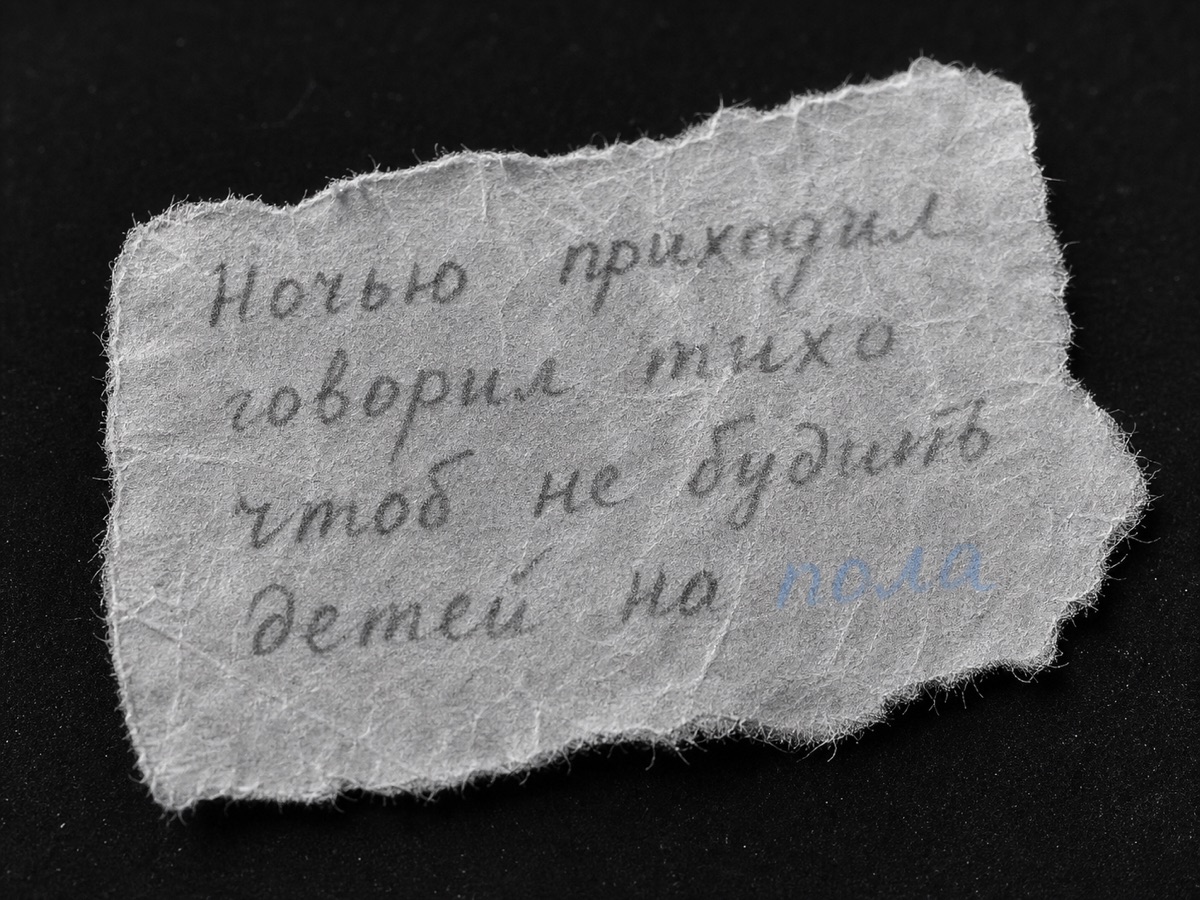
First: the word floor. W.'s manuscript renders it, every time, in a different ink — colder than the ink around it. We do not know how he achieved this in pencil. We have preserved the effect. We add, before Dr. K— can add it for us, that the Russian for "underground" is podpolye: literally, the space beneath the floorboards. The man in Dostoevsky who spites the world from his underground is, in the original, a man from under the floor. We make no further comment.
Second: brackets [ ] mark text missing from the manuscript. Daggers † mark text present in the manuscript that we could not bring ourselves to include.
Third: the number of fragments. W. says thirty-one. Our own inventory, conducted twice, found twenty-nine, and then thirty-three. We have stopped counting. See Appendix A.
Fourth: the men of Point 63 wrote in Russian. Dr. K— holds that certain of their words do not survive translation, and in deference to the dead we have printed those words as written. In deference to the reader we have gone behind his back: rest on any of them, and our rendering will appear on a slip above the line. The words are theirs. The slips are ours. The objection, standing, is his.
The footnote
It began, as these things do, with a footnote. A regional almanac, self-published in 1994 by a man the title page gives only as P.T., shelved in a university library under the wrong decade, devoted eleven pages to the timber stations of a northern river valley. Ten of those pages were freight tables. The eleventh mentioned, in passing, that the inmates of a camp the maps had stopped naming were known to the villages downstream for two things: the quality of their coffin boards, and a card game about farming that no one on the outside could ever quite learn. The page carried a single citation, to Notes from the House of the Dead, with a page number. No edition we have consulted possesses that page.
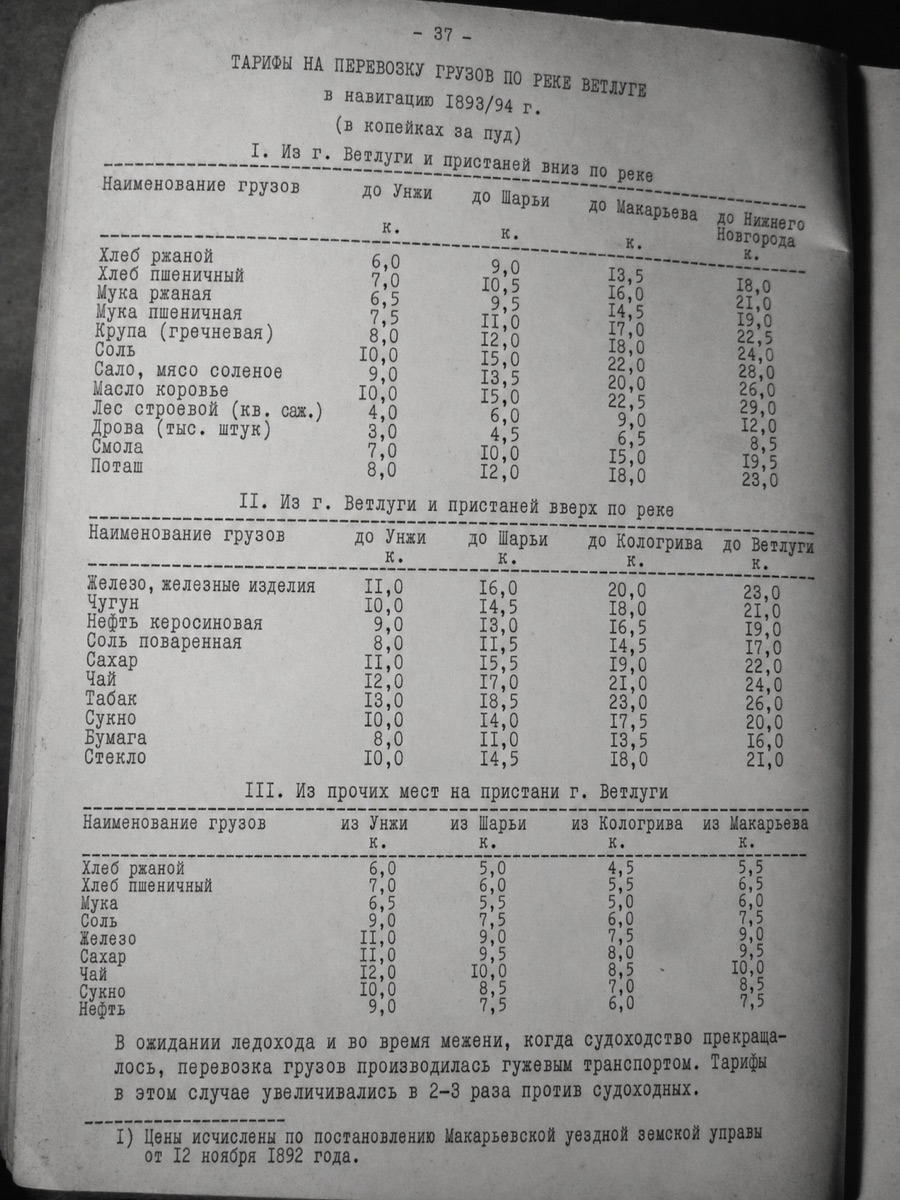
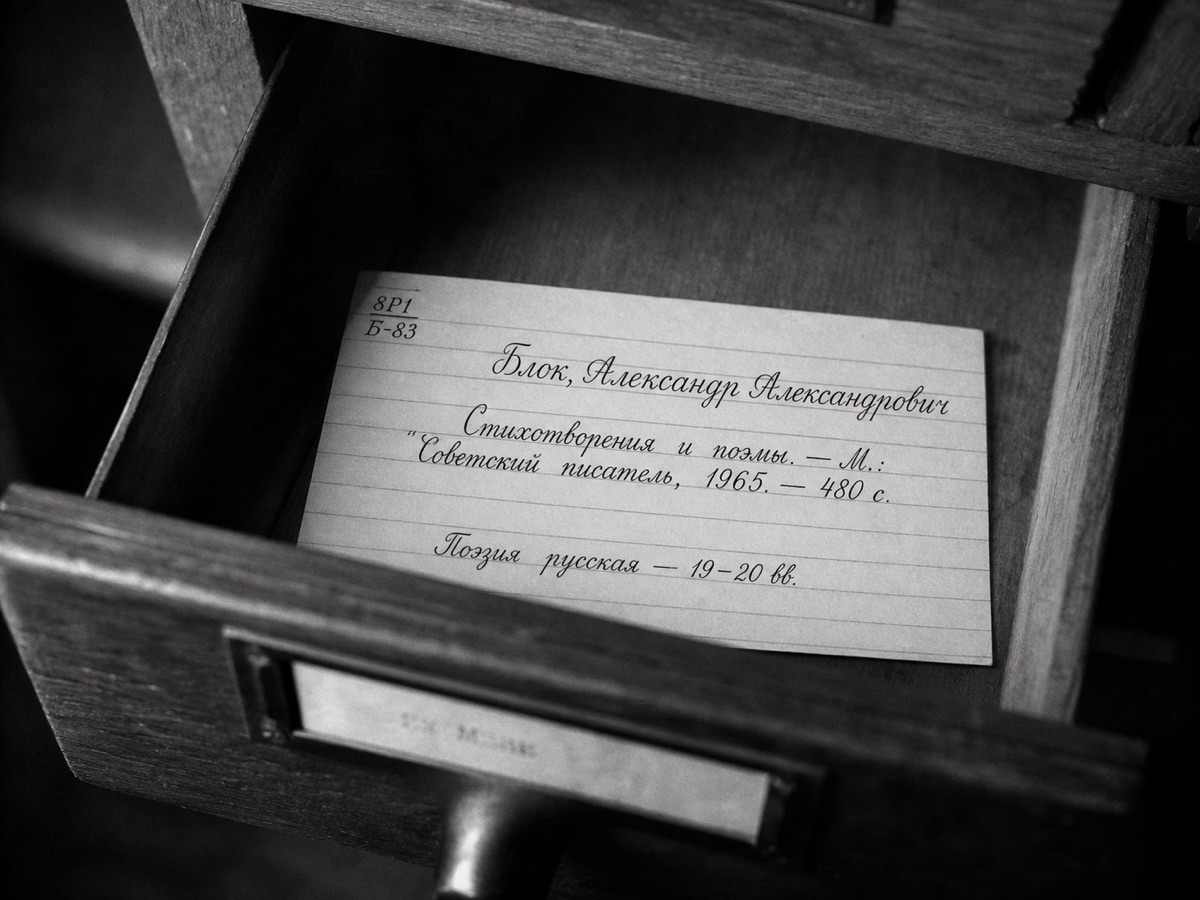
P.T. was dead by the time we went looking for him — the regional paper said only that he had died in keeping with his research.1 The library's copy of the almanac was the only one anyone could locate; its catalog card had been copied out by hand, beautifully, each letter loved separately, the way clerks copied before there was anyone left to pity them. The camp appears in the records as Point 63,11 closed in 1957, buildings left to the larches. We wrote three letters north and received one reply, from a retired schoolteacher in the nearest living village,2 who agreed to walk us in if we came before the mud and after the bears. His reply reached us, by the postmarks, four days before our third letter reached him. We have kept both envelopes. We do not look at them often.
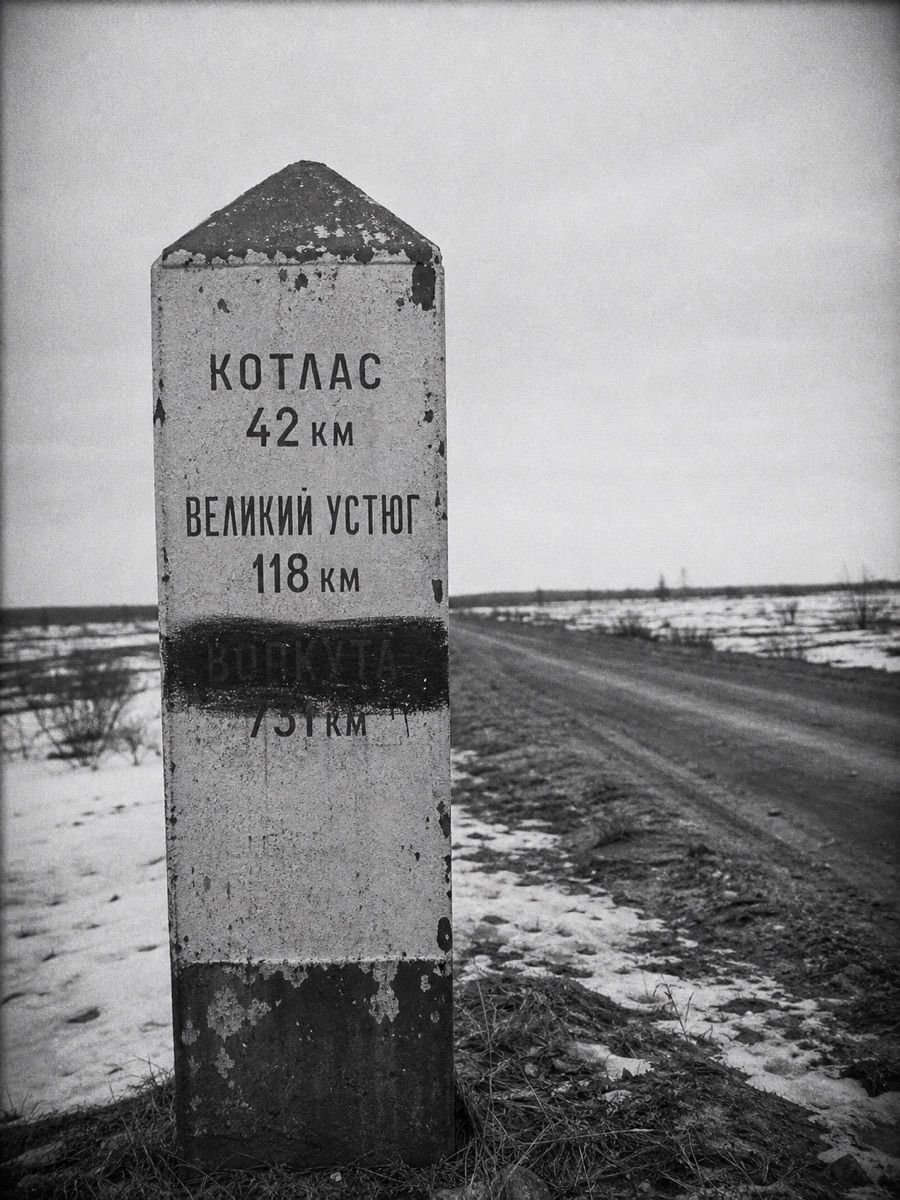
So in the last week of a very cold April we went. The train that goes there stops, according to the timetable, nowhere: the conductor sells you a ticket «до столба» and does not look at you again, and the milestone, when you reach it, gives distances to three towns, two of which exist. We did not linger on the platform. Tolstoy taught this country what platforms are for, and then, at Astapovo, took the lesson himself.
The ruins
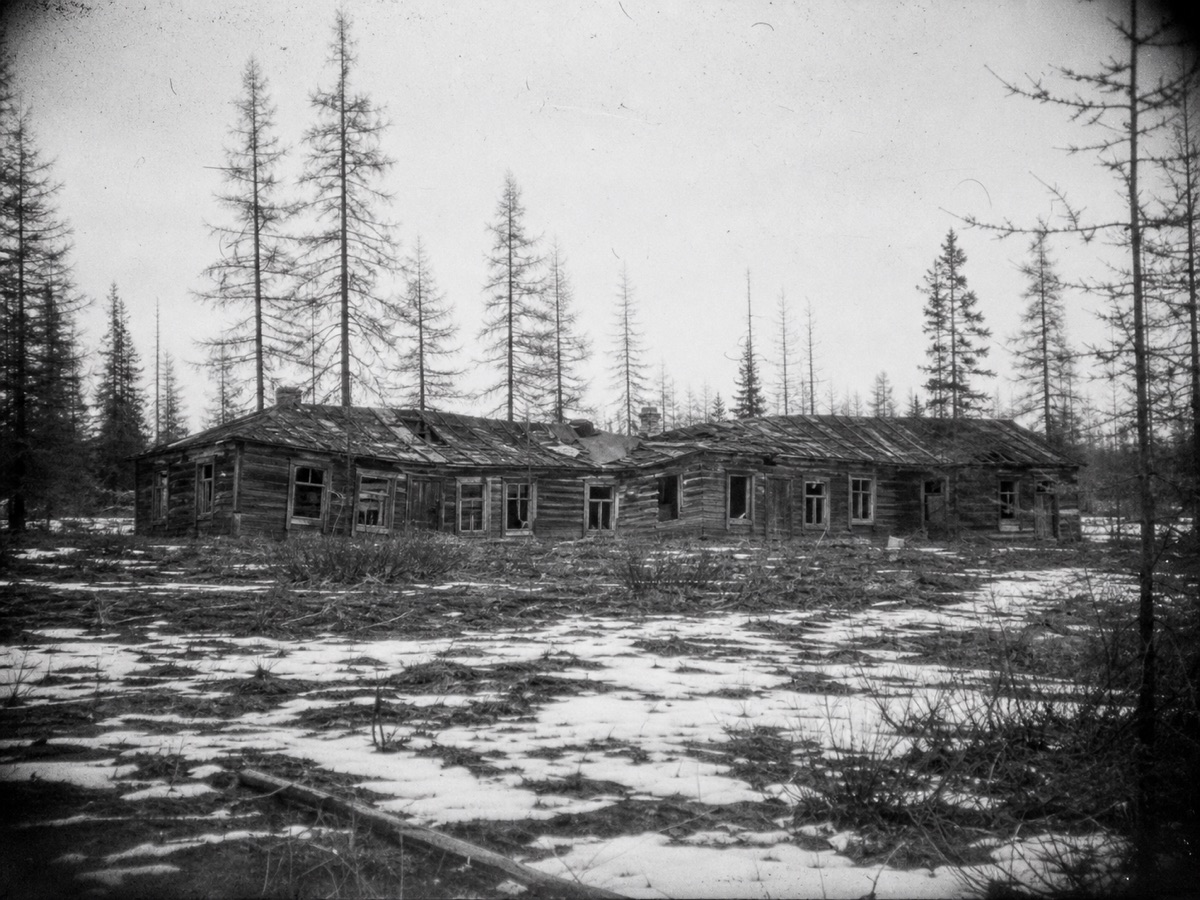
We went in the way Turgenev's hunter went among the villages — on foot, notebook first, trusting to be talked at. There is not much left of a camp after seventy winters. The wire is gone — wire is useful. The watchtowers came down for their nails. What remains is what nobody wanted: the foundations, a brick kiln shouldered open by a birch tree, and one long barracks kept standing by the sheer stubbornness of its roofline.20 Our guide waited outside. He said his grandfather had helped build it and that this was reason enough never to go in. In the evening he built a fire and told stories the way the boys tell them in Bezhin Meadow — low, half to the horses — except that in his stories the dead did not wander. They audited.
The barracks is thirty-four paces long. We measured it because our guide would not come in, and one measures things when one is alone in a place like that. Inside, walking the same wall, it is forty-one paces.3 We measured four times. The numbers did not change, and did not agree. Our photographs of the outside developed normally. Our photographs of the inside were, every one of them, of the outside.
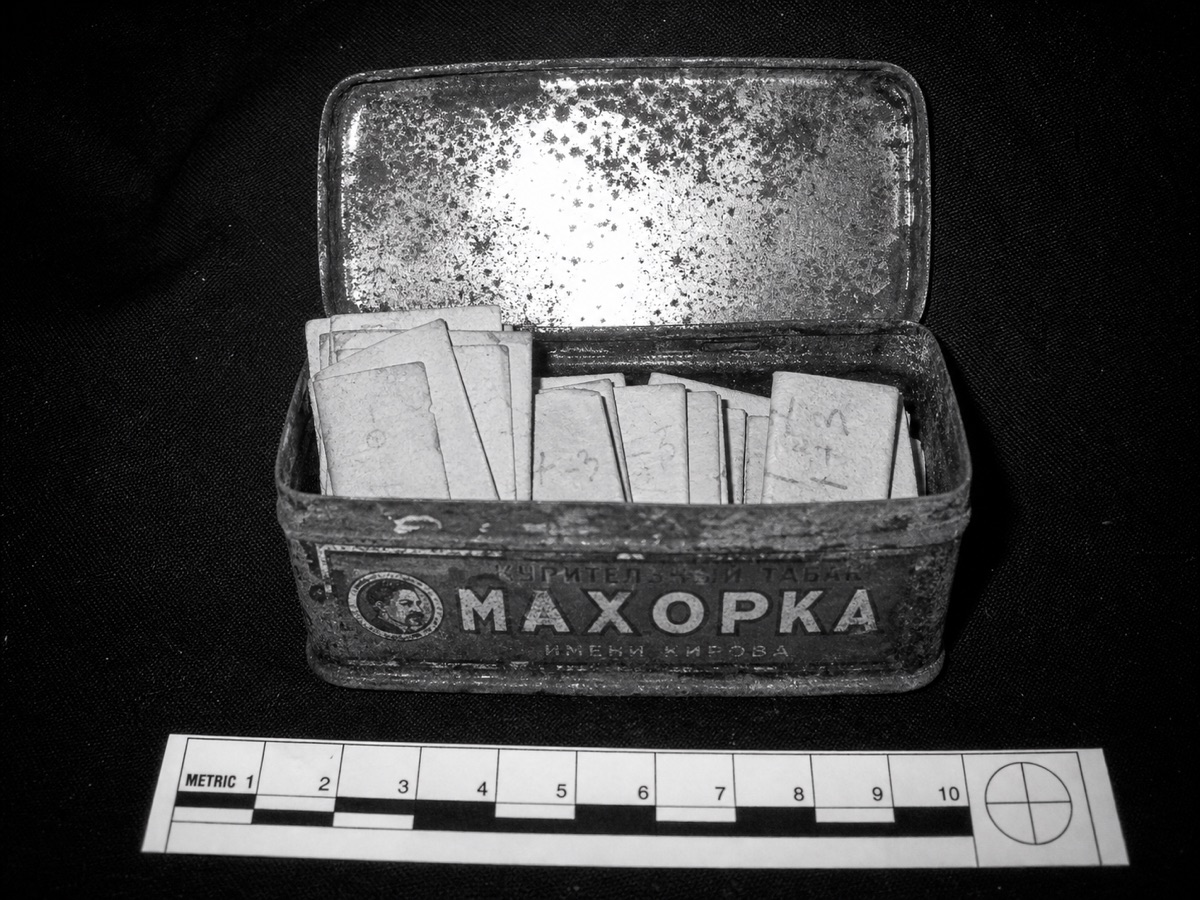
Under the third floorboard from the stove — where every floor in that country keeps its secrets — was a rusted makhorka tobacco tin. And inside the tin, folded into a square the size of a playing card, were thirty-one scraps of paper: cement-bag paper, newspaper margins, the backs of requisition forms. Each one written in indelible pencil, in at least four different hands,4 over what must have been years. We took nothing else from the barracks.†
They were rules.
«Колода — деревня.» Four crops only — wheat, sunflower, potato, beet. What is not a crop does not exist. Remember this and you will not ask foolish questions.
«Все выполненные работы похожи друг на друга.» Every failed job fails in its own way. Both are written down, but only one is read aloud.
Follow the suit that is led if you can. The strongest card takes the trick. But understand: taking is not winning. «Взять — значит быть увиденным.» Everything you take must be assigned, and everything assigned is counted.
The бригадир divides the harvest among the posted jobs. A job fulfilled is applause, and applause is worth nothing. A job failed is a name in the ledger, and «ведомость никого не забывает».
What is still in your hand when the year ends goes under the floor. This is your plot. It is the only thing in the game that is yours. Do not speak of the floor. Do not look at the floor. «Пола нет.»
When a job fails, they come and they count. Whatever in your plot matches what they are looking for, they find, and what they find, they take. Do not plan for whether the knock comes. Plan for «когда».
Requisition can be survived. I have seen it survived. The method is [text missing] and afterward you must never [text missing] in front of the same men twice.
The young one asked the old one: if there is no requisition, then everything is permitted? The old one dealt the next year and said: «реквизиция есть».
There is a man in the deck who is every crop and none. The hand that drew him wrote «вредитель» beneath the wrench. Fourteen hours of work in his hands and every hour of it poison — any job he touches fails, whatever the count. Play him proudly. Receive him bitterly. In this he is like several men we know.
A man once asked how much land a man needs. The story was known even here. The State knows it too. The State liked the ending.
In the fifth year there is no trump and only three tricks, «потому что в пятый год нет» — — —
The reconstruction
Thirty-one scraps do not make a rulebook. They contradict each other. They refer to rules that are not among them — a swap that begins "as before, from the second year," a scoring table reduced by damp to its column headings. We spent the years that followed the way archaeologists spend theirs: playing every version the fragments would permit, hundreds of five-year plans across a kitchen table, until the gaps closed and the game underneath stood up on its own.
By the third year of playtesting we noticed that the arguments about the rules had stopped. Not because we had resolved them — because certain readings, tried at the table, refused to work, and refused in a way that had stopped feeling like design. It felt like being corrected. Tolstoy says somewhere that a scythe, once the man stops thinking about it, mows by itself.18 There were evenings the game played itself in that fashion, and we sat behind it the way a man walks behind a scythe, and it was not our field.
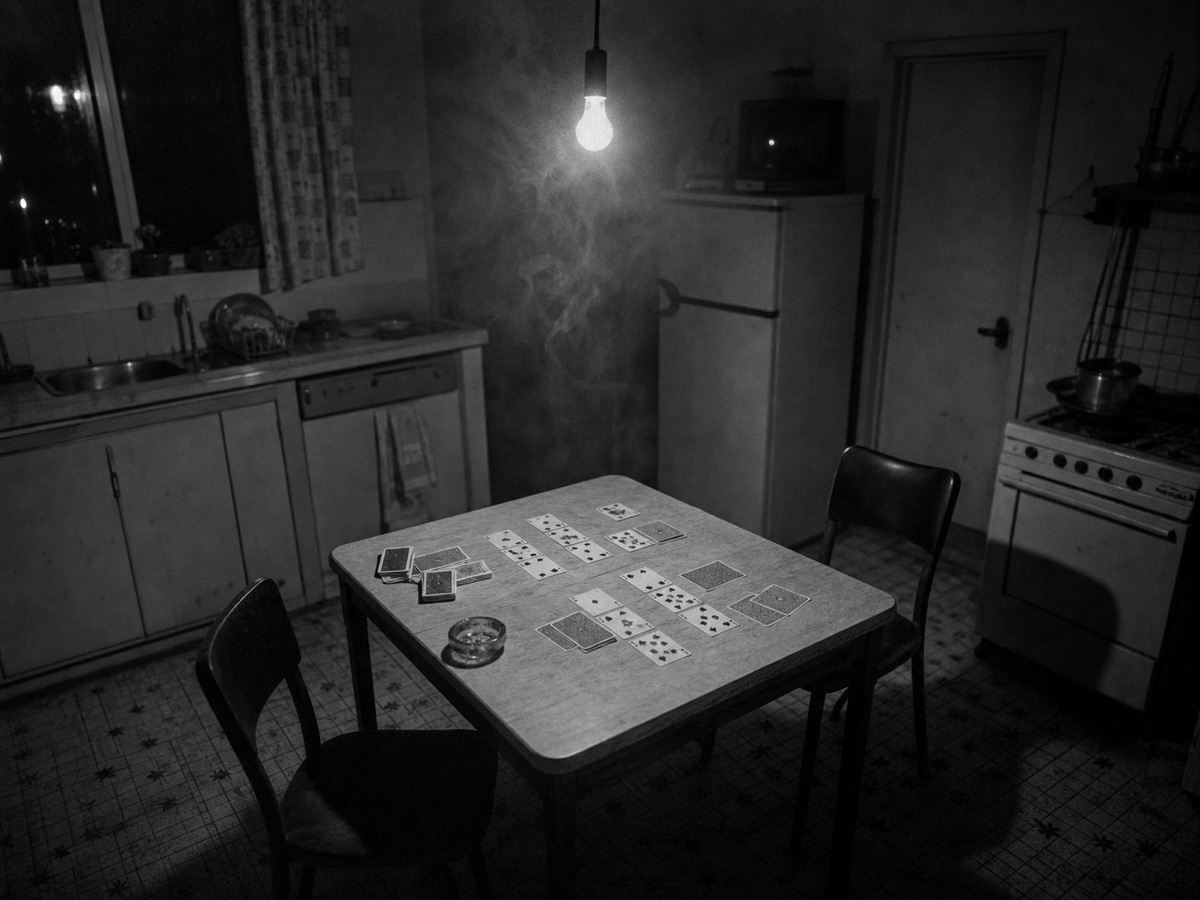
Where two fragments disagreed, we adopted a rule of interpretation and held to it: choose the crueler reading. Everywhere the scraps could be checked against each other, the game sided against the player — and we were not prepared to believe the men who wrote them had grown gentler in the parts we couldn't read.
In the second summer a thirty-second scrap appeared in the tin. It was blank on both
sides. It has since [Passage struck in the manuscript, by a hand
we have not identified. The strike is in the cold ink. There is no thirty-second
scrap.19 —Eds.]
What you hold on your phone is that reconstruction: the village, the ledger, the floor that does not exist, the man with the wrench. We added the pictures, the animations, and an opponent that never needs to sleep. The rest was already written, in four hands, in indelible pencil, waiting under a floorboard for someone to ask the wrong questions in the right library.10
Appendix A — Inventory of the tin
| Item | W. | First inv. | Second inv. |
|---|---|---|---|
| Cement-bag paper | 11 | 9 | 12 |
| Newspaper margins | 7 | 7 | 7 |
| Requisition forms, reverse | 6 | 6 | 9 |
| Cigarette papers | 7 | 6 | 5 |
| Playing card, blank on both sides | — | 1 | 0 |
| Total | 31 | 29 | 33 |
A third inventory was begun this April. It is not complete. We are aware that the numbers which survive all counting are a three, a seven, and an ace, and we are aware of the story in which that sequence ends, and of what the old countess's card did to the man who trusted it. We have declined to bet. —Eds.
How much of this is true
The game is real — you can learn it here. The tin, the almanac, W., Dr. K—, the eleventh page, and the third floorboard from the stove you may assign to whichever job you like; we know which one we'd pick, and it fails requisition. As for the borrowed voices — the count, the hussar, the hunter, the clerk in his overcoat, the man under the floorboards — they are borrowed openly, from the shelf where Russia keeps its evidence.
The camps, however, were real, and so were the people in them, who kept games, songs, and small hidden things alive in places designed to allow none. Kolkhoz is played in that long shadow, and it tries to remember it.
Commentary
The notes below are printed as received, in Dr. K—'s numbering, which is not ours and which does not follow the text. We have stopped apologizing for it. —Eds.
1. in keeping with his research] A regional paper does not write such a sentence. I knew its editor; he wrote obituaries the way he wrote freight tables, which is fitting, since P.T. wrote freight tables the way other men write confessions. The sentence is W.'s. The death, I concede, is real, and it was Gogol's death: February, the stove lit and recently fed with paper, the man declining all food until the question was settled. Whether P.T.'s stove was fed freight tables or a twelfth page of his own, the coroner did not think to ask. ↩
2. a retired schoolteacher] There is no schoolteacher. I have been to the village and its residents assure me that no one has ever retired there; retirement requires a before and an after. There is, they allow, a man who walks people in; they call him «проводник». The editors will want him to be Maxim Maximych — every account of this kind requires one, the old campaigner who knows the passes and is discarded by the narrative once used, and Lermontov at least had the grace to leave his weeping on the road. The man who walks people in does not weep. The village asked me to write that down as well. ↩
3. it is forty-one paces] W.'s stride is short; I have walked behind him and can testify. Measured with a proper surveyor's chain, the interior of the barracks is the same length as the exterior on every day of the year but one. The staff of the regional museum decline to say which day. I no longer visit in April. ↩
4. at least four different hands] Five. The fourth hand also wrote with its left. See note 9. ↩
5. Four crops only] Here I must speak plainly. This game was played in my grandmother's village three hundred kilometers from Point 63, under the name «Опись», before W. was born, and it had five suits, the fifth being turnips. W. has four crops because W. had four fragments. I have five crops because my grandmother had five fields. The reader may decide which of us is closer to the soil. As for what is not a crop does not exist — the reader will be told this is nihilism, Bazarov's creed. Bazarov denied everything from a landowner's guest room and died of a scratch acquired in the pursuit of science. At Point 63 the sentence is not a philosophy. It is a warning about the census. ↩
6. a man holding a wrench] It is a portrait. I decline to say of whom, beyond noting that the resemblance is not approximate, and that the man it resembles could not have been at Point 63 before the drawing was made. After it was made — yes. The editors ask how one drawing can be two things. I refer them to the collegiate assessor whose nose left his face, put on a uniform of a higher rank, and prayed in the Kazan cathedral untouchable; Gogol reported the case and was believed. In this country a picture may outrank its subject. The drawing knows it. ↩
7. There is no floor] The editors marvel, in their foreword, at pencil that reads cold, and hurry past it to their podpolye, pleased with their Dostoevsky. Their philology is correct and useless. The men of Point 63 did not name the space under the floor after a book; the book is named after spaces like it. They kept a separate pencil-stub for that one word — пол — and it is not the ink that is cold. I will not explain the practice further in a document sold alongside a game. ↩
8. in the fifth year there is no —] The sentence ends "no trump." It is a rules sentence; the poetry is the reader's invention. I should add that in my grandmother's village the sentence ended «пятого года не будет», which is also a rules sentence. In the interest of completeness: I have once seen it ended "no one left who remembers losing," but only once, and in my own handwriting, and I do not remember writing it. ↩
9. [This note reached us as a sealed envelope, with instructions that it be printed unopened. It is printed unopened. —Eds.]
10. the right library] I have written to the library. The almanac is no longer in its catalog; the librarian, who is patient, replies that it was never in its catalog, and that mine was the second letter to ask. I return to Point 63 in April, against my own advice, with a surveyor's chain and an empty tin. If this account is printed a third time it will not need my commentary. It will need my forwarding address. —V.K. ↩
11. Point 63] Pierre Bezukhov once proved by arithmetic that it fell to him, personally, to kill Napoleon. The proof was false and he believed it, which is the Russian relationship to arithmetic in miniature. I have performed a comparable arithmetic upon the number 63. I will not print the result. It is false, and I believe it. ↩
12. All fulfilled jobs are alike] The reader hears Tolstoy and feels clever. Hear instead a man on a bunk improving Tolstoy. Anna Karenina opens with families because the count could afford families; at Point 63, jobs were what remained to be happy or unhappy in. The emendation is exact, and the count, wherever he is, has no grounds for complaint. ↩
13. hand of the "accountant"] A copyist's hand — each letter loved separately, the words not at all. Gogol met this man a century earlier and wrapped him in an overcoat, and the overcoat was taken from him, and he died of it, and came back for it. Point 63 issued no overcoats. What its copyist came back for, the fragments do not say. See Fragment 14. ↩
14. a name in the ledger] There was a gentleman in Gogol who drove from estate to estate buying dead souls — peasants dead since the last census, alive on paper, worth money to a man with patience for paperwork. The camps ran the same scheme in reverse: the paper was kept alive and the men were let lapse. Every scheme in this country is eventually run in both directions. The ledger in the game is where the two directions meet, and the game is honest about which direction pays. ↩
15. Plan for when] Compare Lermontov's Vulich, who put a pistol to his temple to settle a wager on predestination, and won the wager, and was dead by morning anyway, of a drunkard's sabre on an unrelated street. "The Fatalist" is the shortest chapter in A Hero of Our Time because there was nothing more to say. Fragment 17 says it in fewer words and without wasting the pistol; the men of Point 63 had learned to economize. ↩
16. there is requisition] The exchange is lifted, of course, from the Karamazovs, with the Almighty replaced by the collection quota — an emendation history had already made; the fragment merely initials it. I will add that Dostoevsky learned cards in a prison yard in Omsk, from men whose names he was careful to change, and that he would have understood this game at the first deal and been in debt by the second. ↩
17. how much land a man needs] Tolstoy. The peasant Pakhom runs from dawn to dusk to circle the land that will be his, and dies at sundown with the circle closed, and the answer to the title question is the six feet in which they bury him. At Point 63 the story was regarded as an optimist's: Pakhom, at least, held the six feet freehold. ↩
18. a scythe mows by itself] Levin — and W. cites Tolstoy the way city men cite weather. Levin's scythe swung itself for one afternoon, and he wept for joy, and went in to his dinner. It was, I am obliged to note, his own field. The distinction is not small. The distinction is the entire game W. claims to have found. ↩
19. There is no thirty-second scrap] Concerning stoves. It is a national tradition that manuscripts are given to them by their own authors: Gogol fed his the second volume of Dead Souls and then, as if to keep it company, declined further meals until the matter was settled. What the stove at Point 63 was fed, none of us can know. I observe only that W. counts his floorboards outward from the stove; that the strike through this passage is in the cold ink; and that the cold ink is not W.'s. The editors, I am told, intend to console themselves with Bulgakov — manuscripts don't burn. Bulgakov was an optimist. He never met this stove. What does not burn is the ash's memory of having been a manuscript, and the game, reader, is largely that. ↩
20. the foundations] Here the required reading is Platonov. In The Foundation Pit the diggers dig the pit for a building that will house the future, and the pit grows in proportion to the future, and the building is never begun; a child is buried in its wall instead, as a start on the inhabitants. Point 63 should be read in this tradition. The pit was the finished work. The barracks was an afterthought, the fragments were the architecture, and the game is the only structure on the site that was ever completed to plan. ↩